
Commercial painters help protect and maintain the buildings people use every day. Their work can be found in offices, schools, hospitals, hotels, stores, warehouses, manufacturing facilities, and many other commercial properties.
The job involves much more than applying paint. Commercial painters prepare surfaces, select and apply appropriate coating systems, operate specialized equipment, follow safety requirements, and coordinate their work with building owners, project managers, and other trades.
For anyone interested in the trade, or simply curious about the people working behind the scenes on a commercial painting project, this guide explains the job, required skills, training options, earning potential, and long-term career path.
What Is a Commercial Painter?
A commercial painter is a skilled tradesperson who prepares and coats surfaces in nonresidential buildings and facilities. Depending on the project, those surfaces may include drywall, wood, concrete, masonry, metal, ceilings, floors, structural components, and exterior siding.
Commercial painters may work on new construction, renovations, tenant improvements, routine maintenance, or complete building repaints. Their goal is not limited to improving appearance. Paints, primers, sealants, and specialty coatings can also help protect surfaces from moisture, corrosion, chemicals, abrasion, and everyday wear.
Commercial painting is different from residential painting in several important ways. Commercial projects are generally larger, involve more workers, use a wider variety of coatings, and require closer coordination with other contractors. Work may also need to be completed in phases or outside normal business hours to limit disruption to employees, customers, students, patients, or tenants.
What Does a Commercial Painter Do?
The specific responsibilities vary by project, but most commercial painting work includes the following tasks.
Inspecting and preparing surfaces
Surface preparation is one of the most important parts of a lasting paint job. Before applying a coating, painters may:
- Clean walls, ceilings, floors, or exterior surfaces
- Scrape away loose or failing paint
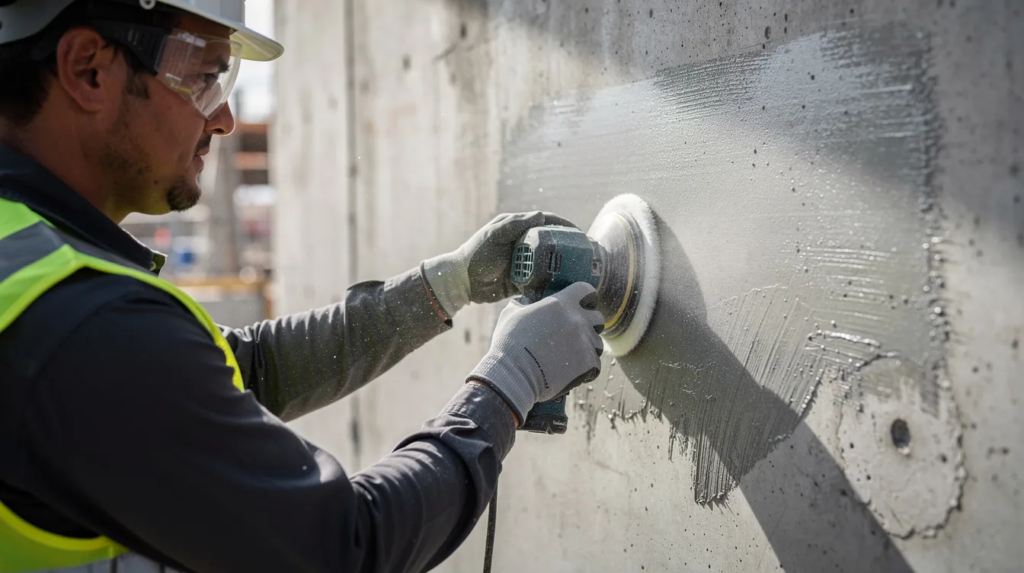
- Sand rough or glossy areas
- Fill holes, cracks, and damaged sections
- Caulk joints and gaps
- Remove dust, grease, mildew, or other contaminants
- Protect nearby floors, fixtures, equipment, and furnishings
- Apply the correct primer for the surface and coating system
Even an expensive coating can fail when applied over a dirty, damp, unstable, or improperly prepared surface.
Applying paints and protective coatings
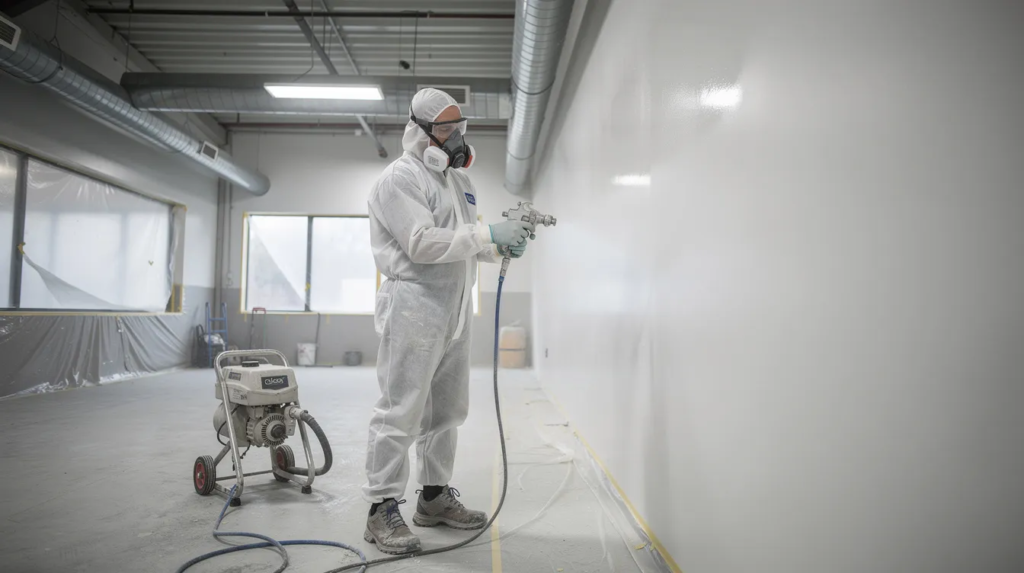
Commercial painters use brushes, rollers, and airless spray equipment depending on the surface, finish requirements, and size of the project. They must understand coverage rates, drying times, recoat windows, temperature limits, ventilation needs, and manufacturer instructions.
Common materials include:
- Interior and exterior paints
- Primers and sealers
- Stains and clear finishes
- Elastomeric coatings
- Epoxy and other floor coatings
- Corrosion-resistant coatings
- Low-odor and low-VOC products
- Fire-resistant or intumescent coatings
- Anti-graffiti and high-durability finishes
Some specialty systems require additional training or manufacturer certification.
Reading plans and following specifications
Large commercial projects often include architectural drawings, finish schedules, product specifications, and written scope requirements. Painters may need to identify colors, sheen levels, approved products, application methods, and the number of required coats for each area.
Following these documents carefully helps the finished work meet the expectations of the property owner, architect, general contractor, and coating manufacturer.
Coordinating with other trades
Commercial painters rarely work in isolation. Electricians, carpenters, drywall installers, plumbers, flooring contractors, and HVAC technicians may all be working in the same building.
Painters must sequence their work so surfaces are ready when needed and finished areas are not damaged by later construction. Clear communication and reliable scheduling can prevent delays and expensive rework.
Cleaning and inspecting the completed work
Professional cleanup includes removing masking materials, collecting waste, cleaning equipment, returning moved items, and leaving the work area ready for use. Painters or supervisors also inspect completed surfaces for missed areas, uneven coverage, drips, overspray, and other defects before the project is closed out.
Where Do Commercial Painters Work?
Commercial painters work in many different environments, including:
- Office buildings
- Retail stores and shopping centers
- Schools and universities
- Hospitals and medical offices
- Hotels and restaurants
- Warehouses and distribution centers
- Manufacturing facilities
- Apartment and condominium common areas
- Municipal and government buildings
- Entertainment and recreational facilities
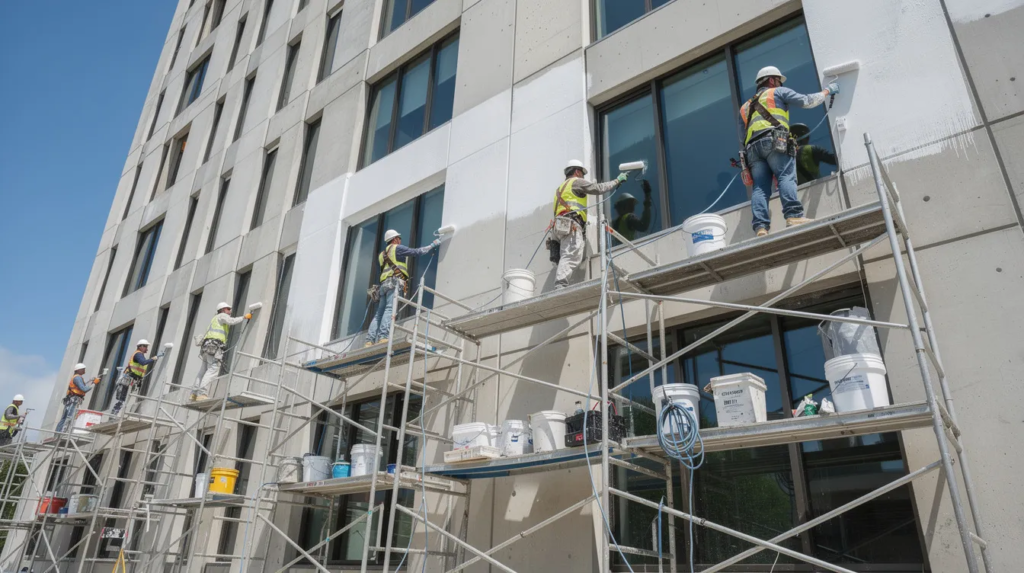
Some projects take place in occupied buildings, while others are active construction sites. Painters may work indoors, outdoors, at ground level, or from ladders, scaffolding, and aerial lifts.
Work schedules also vary. A typical schedule may be close to 40 hours per week, but evening, overnight, or weekend work is common when a building must remain open during normal business hours. Exterior work can be affected by weather, while interior projects may continue throughout the year.
Commercial Painting Versus Residential Painting
Both types of painting require careful preparation and application, but the working conditions can be very different.
| Commercial painting | Residential painting |
|---|---|
| Usually involves offices, facilities, stores, warehouses, and other nonresidential properties | Primarily involves houses, apartments, and other living spaces |
| Often covers large surface areas | Usually involves smaller individual projects |
| May require lifts, scaffolding, spray equipment, and large crews | More commonly relies on ladders, brushes, rollers, and smaller crews |
| Frequently follows architectural specifications and strict schedules | Often allows more direct product and color decisions with the homeowner |
| May use industrial or high-performance coatings | Commonly uses architectural paints and stains |
| Often requires coordination with several trades | Usually involves fewer contractors working at the same time |
One type is not automatically more skilled than the other. They demand overlapping abilities, but commercial painters are more likely to work at scale, follow detailed project specifications, and use specialized equipment or coatings.
Skills Successful Commercial Painters Need
Commercial painting combines technical ability with dependable work habits. Important skills include:
Attention to detail
Clean lines, uniform coverage, proper preparation, and careful protection of surrounding surfaces all require patience and close attention. Small errors can become highly visible across a large wall or under commercial lighting.
Knowledge of materials
Painters need to understand which primers and coatings are compatible with drywall, masonry, concrete, wood, metal, and previously painted surfaces. They must also know how environmental conditions can affect adhesion, curing, and the final appearance.
Manual dexterity and physical stamina
The work requires controlled hand movements as well as frequent standing, bending, kneeling, reaching, climbing, and lifting. The U.S. Bureau of Labor Statistics describes painting as physically demanding, particularly when work takes place at heights or in uncomfortable positions.
Basic math and measurement
Painters calculate surface areas, estimate material quantities, measure layouts, and track coverage. Accurate measurements help reduce waste and avoid delays caused by material shortages.
Communication and teamwork
Painters must understand instructions, report surface problems, coordinate access, and work safely around other people. Crew leads and forepersons also need to assign work, monitor quality, and communicate progress.
Reliability
Commercial construction and maintenance schedules are closely connected. When one trade falls behind, several others may be affected. Arriving on time, completing assigned work, and communicating problems early are essential professional habits.
Education and Training Requirements
There is no single route into commercial painting. According to the U.S. Bureau of Labor Statistics, no formal educational credential is typically required to enter the painting trade, and most painters learn through on-the-job training.
New painters often begin by handling preparation, masking, material setup, cleanup, and basic application tasks under the direction of experienced workers. As their ability improves, they take responsibility for more visible surfaces, equipment, and complex coating systems.
Formal apprenticeships are another option. BLS reports that painting apprenticeships, where available, commonly last three or four years and combine technical instruction with paid on-the-job training. Apprenticeship requirements differ by program and region. Opportunities can be found through local contractors, unions, state apprenticeship agencies, and the federal Apprenticeship Job Finder.
A high school diploma or GED may be required for some apprenticeship programs, even though it is not a universal requirement for entry-level painting work.
Licensing and Certification
Requirements depend on the worker’s role and location.
An employee working for a painting company may not need a contractor license, but an individual bidding and contracting directly with customers may be subject to state or local registration, licensing, insurance, and bonding requirements. Anyone planning to operate a painting business should verify current rules with the appropriate state and municipal agencies.
Depending on the project, useful or required training may include:
- Ladder, scaffold, and fall-protection safety
- Aerial or scissor-lift operation
- Respiratory protection
- Hazard communication
- Lead-safe work practices
- Manufacturer training for specialty coating systems
The Environmental Protection Agency’s Renovation, Repair and Painting Rule applies to paid work that disturbs painted surfaces in most pre-1978 housing and child-occupied facilities, including certain schools and childcare centers. Covered firms and renovators must meet applicable certification, training, and work-practice requirements. More information is available from the EPA’s RRP contractor guidance.
How Much Do Commercial Painters Earn?
The Bureau of Labor Statistics groups commercial painters with other construction and maintenance painters rather than publishing a separate national wage specifically for commercial work.
As of May 2025, the national median wage for construction and maintenance painters was $49,400 per year, or $23.75 per hour. The lowest 10 percent earned less than $37,440, while the highest 10 percent earned more than $78,810.
Actual earnings vary based on:
- Location and local labor demand
- Experience and level of responsibility
- Union or nonunion employment
- Overtime and travel requirements
- Publicly funded or prevailing-wage work
- Specialty coating knowledge
- Supervisory or project-management duties
Because compensation varies substantially by region and employer, local job listings and published wage schedules provide a better estimate for a specific market than a single national figure.
Career Outlook and Advancement
BLS projects employment for construction and maintenance painters to grow 3 percent from 2025 through 2035, about as fast as the average for all occupations. Approximately 24,900 openings are projected each year during that period. Many will result from workers changing occupations or leaving the workforce, while new construction and ongoing property maintenance will continue to create demand.
With experience, a commercial painter may advance through positions such as:
- Painter helper or trainee
- Apprentice painter
- Journey-level painter
- Crew leader or foreperson
- Superintendent or field supervisor
- Estimator
- Project manager
- Painting contractor or business owner
Painters may also specialize in areas such as floor coatings, corrosion control, high-performance coatings, historic restoration, decorative finishes, industrial facilities, or healthcare environments.
Advancement depends on more than application skill. Leadership positions require planning, documentation, communication, quality control, and the ability to keep a crew working safely and efficiently.
What Does a Commercial Painting Project Involve?
Understanding the overall process helps explain why commercial painting requires coordination and technical knowledge.
1. Site assessment
The contractor inspects the building, identifies surface conditions, measures work areas, discusses access, and evaluates potential repairs or hazards.
2. Scope and coating selection
The project team determines which surfaces will be painted, how they will be prepared, which products will be used, and how many coats are required. Product selection should reflect the surface, exposure, expected wear, and desired appearance.
3. Scheduling and protection
Work is organized around building operations and other trades. Floors, equipment, fixtures, landscaping, and occupied areas are protected before preparation begins.
4. Surface preparation
Painters clean, repair, sand, scrape, caulk, and prime as required. The amount of preparation depends on the condition of the existing surface and the coating specification.
5. Application
Coatings are applied using the appropriate tools and within the manufacturer’s stated environmental and recoat conditions.
6. Quality control and cleanup
The finished surfaces are inspected, deficiencies are corrected, and the work area is cleaned and returned to service.
Each stage affects the next. Skipping preparation or rushing required drying time may save time temporarily, but it can reduce coating performance and shorten the life of the finished work.
Is Commercial Painting a Good Career?
Commercial painting can be a practical career for someone who enjoys hands-on work, visible results, changing work environments, and learning a skilled trade without pursuing a traditional four-year degree.
It is also physically demanding. The work may involve heights, repetitive movement, protective equipment, strong odors, tight deadlines, and schedules outside standard business hours. Anyone considering the career should weigh those conditions alongside the opportunity to develop transferable skills and advance into supervision, estimating, project management, or business ownership.
Frequently Asked Questions
Do commercial painters need previous experience?
Not always. Some employers hire helpers or trainees and provide on-the-job instruction. Experience may be required for positions involving spray equipment, specialty coatings, leadership, or independent work.
Do commercial painters need a college degree?
No formal college degree is typically required. Most painters learn through paid work experience, employer training, or an apprenticeship.
How long does it take to become a qualified commercial painter?
A new painter can learn basic preparation and application skills relatively quickly, but developing broad, independent trade proficiency takes years of regular experience. Formal painting apprenticeships commonly last three or four years.
What tools do commercial painters use?
Common tools include brushes, rollers, extension poles, scrapers, sanders, caulking guns, pressure washers, airless sprayers, ladders, scaffolding, and aerial lifts. The equipment used depends on the building, surface, and coating system.
Is commercial painting seasonal?
Exterior painting is affected by weather and temperature, particularly in colder climates. Interior commercial work, maintenance projects, renovations, and new construction can provide work throughout the year.
Can commercial painters specialize?
Yes. Experienced painters may focus on industrial coatings, epoxy floors, healthcare facilities, historic properties, decorative finishes, corrosion protection, or other specialized work.
Final Thoughts
Commercial painting is a skilled trade built on preparation, product knowledge, safe work practices, and attention to detail. The work ranges from refreshing an occupied office to protecting concrete, masonry, or metal in demanding environments.
Whether you are considering the trade or researching what professional commercial painting involves, understanding the process makes one point clear: the quality of the finished surface depends heavily on the work completed before the final coat is applied.