
Interior Paint Color Trends Coastal Homes: Top 5 for 2026
Color is the first thing that hits you when you walk into a coastal home, and in 2026 your paint choices are doing way more than just looking pretty. Coastal design is a style defined by beach-inspired colors, natural textures, and a relaxed, airy atmosphere that brings the seaside indoors. They’re shaping how relaxed you feel after work, how airy your rooms seem, even how connected you feel to the water outside. If you’ve ever stared at a wall of paint chips and thought, ok… now what, you’re not alone, and that’s exactly why these top 5 interior color trends matter for your space.
Introduction to Coastal Living
Coastal living is all about capturing the easygoing, tranquil spirit of the shoreline and infusing it into your home. The right coastal paint colors can instantly evoke the feeling of a seaside escape, transforming any room into a calming retreat. Whether you’re steps from the water or just want to bring a bit of the coast inland, choosing paint colors inspired by the ocean, sky, and sand is key. Soft blues, crisp whites, and sandy neutrals are among the best coastal paint colors for creating a light, airy feel that reflects natural light beautifully. For example, Sherwin Williams Sea Salt is a perennial favorite for its ability to shift between blue, green, and gray depending on the light, while Sherwin Williams’ other soft blues can make any space feel fresh and open. Pairing these shades with natural textures and plenty of sunlight helps create a coastal inspired space that feels both relaxed and sophisticated—perfect for anyone craving that breezy, coastal living vibe.
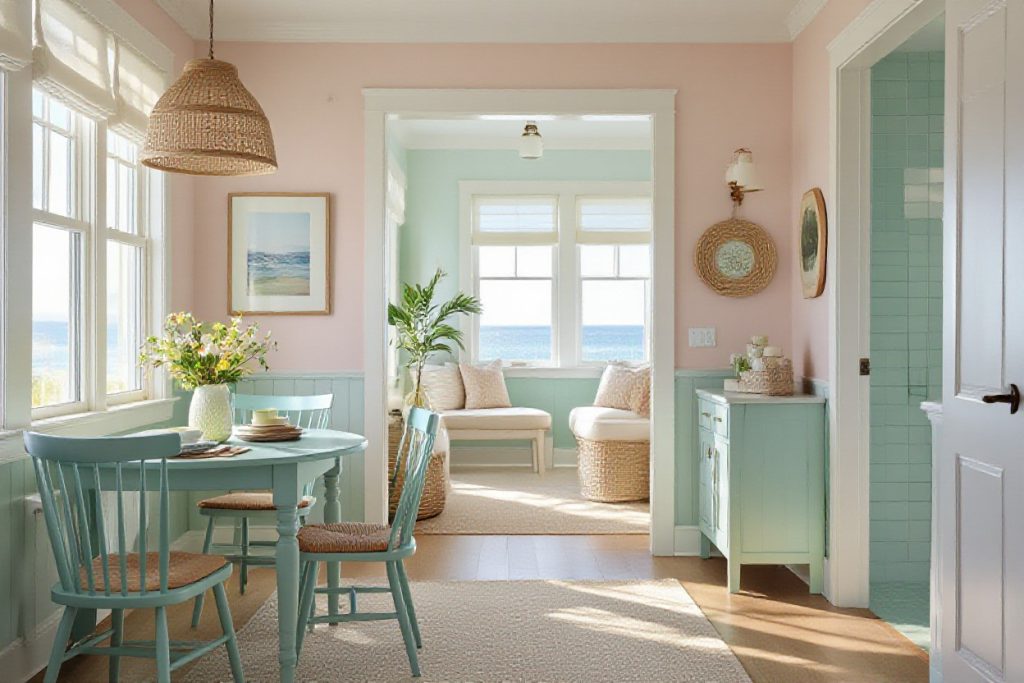
Key Takeaways:
Favorite coastal paint colors to consider:
- Soft sea-glass greens and watery blue-grays are going to be the go-to wall colors, especially in living rooms, dining rooms, and primary bedrooms. These shades look especially beautiful in dining rooms with plenty of natural light, pulling the outside in without screaming “beach rental”—they feel relaxed but still grown up.
- Warm sand-inspired neutrals are replacing stark white, so think light beige, mushroom, and oat shades paired with crisp white trim… that combo keeps everything bright for coastal light while hiding scuffs, kids, and salt spray a whole lot better than pure white walls.
- Muted sun-faded colors like terracotta blush, stormy navy, and driftwood taupe will show up as bold accents on interior doors, kitchen islands, or feature walls, giving coastal homes more depth and character without losing that airy, breezy vibe.
What’s Hot in Coastal Paint Colors for 2026?
Bold shifts are happening in coastal palettes for 2026, and they’re way more layered than basic blue-and-white. You’re seeing paint brands push complex blue-grays, sun-faded aquas, and sandy neutrals with a whisper of pink or peach, all tested in real homes for light performance over 12 months. Benjamin Moore colors are also popular choices for achieving the right paint colors in coastal homes, with many designers selecting specific Benjamin Moore shades to create a relaxed, seaside vibe. In coastal markets from Cape Cod to Malibu, designers are pairing these hues with low-sheen finishes so your walls diffuse glare instead of bouncing it around like crazy. The overall move is clear: softer colors, richer undertones, way more sophistication.
Shades That Bring the Ocean Inside
Color forecasts from major paint companies are stacking up around one theme: ocean-inspired blues that feel calm, not cold. You’re going to see mid-tone blue-grays like Sherwin-Williams Sea Salt-level vibes, but with slightly deeper pigment so they don’t wash out in harsh coastal light. Many designers now layer a light blue on the ceiling, which pairs beautifully with a moodier blue-green on accent walls to mimic depth, almost like your room has a tide line. It’s subtle, but your space suddenly feels wrapped in coastline energy.
Earthy Tones That Feel Fresh and Inviting
Instead of flat beige, you’re getting sandy clays, sun-baked taupes, and warm stone hues that actually feel coastal, not cookie-cutter. Your best bets are pale mushroom, soft putty, and light terracotta with a bit of pink in the mix, since they play nice with both cool ocean blues and warm wood tones. Muted green gray is another perfect shade for creating a calm, coastal-inspired backdrop, offering a soft, versatile neutral that resembles sea foam or coastal mist. Paint trend reports from 2024 and 2025 already showed a 30% jump in these earth-leaning neutrals in coastal remodels, and 2026 just keeps that curve going. The vibe is simple: natural, grounded, and quietly luxurious.
When you lean into these earthy tones, your whole home starts to feel like it grew out of the landscape instead of being dropped on top of it. You might paint your main living area a pale clay that reads almost like wet sand, then anchor the kitchen island in a deeper mushroom that hides scuffs and salt spray from damp groceries. Because these colors usually have an LRV in the 50-65 range, they bounce enough light to keep things bright but still cozy at night with warm LEDs. Pair them with woven jute, pale oak, and linen upholstery and you’ll get that relaxed, barefoot-friendly space that still looks polished enough for a design magazine spread.
My Take on Blues – Are They Still in?
Blues are absolutely not going anywhere, they’re just growing up a bit. You’ll see fewer icy baby blues and way more watery blue-grays and slatey coastal tones that play nicer with your wood floors and woven textures. Deeper blues, such as Benjamin Moore Hale Navy, are becoming especially popular for coastal homes, offering a sophisticated and calming look that works well for accent walls or bold statements. If your home leans modern, you can push into inky blue-black; if it’s more cottage-y, think faded denim on the walls. The trick is pairing the right depth of blue with warm whites and sandy neutrals so your rooms feel breezy, not chilly.
The Power of Soft, Soothing Blues
Soft blues still carry serious weight in coastal spaces, especially when you treat them almost like a neutral. Picture a barely-there blue with an LRV around 65 to 70 wrapping your living room, bouncing light but still reading cozy on cloudy days. When you mix those whispery blues with warm white trim—Benjamin Moore Simply White is a popular choice for its versatile, warm undertones—natural jute, and a couple of linen slipcovered pieces, you get that easy, rental-worthy look without it feeling like a theme park beach house.
Bold Nautical Blues – A Comeback?
Deep nautical blues are absolutely creeping back in, but you’re using them smarter than we all did in the 2010s. Instead of painting every wall navy, you might anchor one wall behind your bed, your kitchen island, or a built-in bench in something like a 10 to 15 LRV navy. Pair that with unlacquered brass, chunky woven pendants, and warm oak, and suddenly that strong color feels elevated, not cartoony-coastal.
What really makes bold nautical blues work in 2026 is how you balance them with texture and light, not seashell art and anchor pillows. You might wrap a small powder room in a saturated blue and keep the ceiling bright white so it feels like a jewel box, then repeat that same blue in a stripe on your outdoor cushions for a little rhythm. In open-plan spaces, using that deep blue in 20 to 30 percent of the visual field (island, lower cabinets, a pair of doors) gives you drama without overwhelming your sightlines. Incorporating clean lines in cabinetry or built-ins further enhances the impact of bold nautical blues, creating a minimalistic and sleek look that complements the relaxed, beach-inspired ambiance. If you keep your undertones on the warmer side and mix in plenty of woven pieces and off-white, that classic maritime vibe suddenly feels fresh again, not stuck in a Pinterest board from 2013.
Why I Think Neutrals Aren’t Boring Anymore
Picture your living room at 4 p.m., light bouncing off the water outside, and instead of flat builder-beige walls, you’ve got layered neutrals catching every shift in the sky. You’re not stuck with one safe tone anymore – you’re playing with texture, soft contrast, and just enough depth that your art, woven baskets, and driftwood finds suddenly look curated, not cluttered. Incorporating coastal elements like driftwood, seashells, or weathered textures can further enhance the look of a coastal-inspired home, making neutrals feel intentional and authentic. Neutrals in 2026 feel more like a subtle coastal filter than a background.
Creams and Beiges with a Twist
In a coastal space, you can treat creams and beiges like the dry sand under your feet – warm, soft, but never bland. Try a creamy white with a tiny drop of peach or pink so your room glows during golden hour, or a pale beige with a green undertone that quietly links to your sea grass planters. Choosing the right cream or beige undertone is a great way to express your personal style in a coastal setting, letting you tailor the look to your unique taste. Once you add limewash, grasscloth, or ribbed wood accents, those “plain” walls start to look surprisingly high-end.
Greys That Evoke Coastal Vibes
Greys now feel more like sea mist than city concrete, which is exactly what your coastal rooms need. A light grey with a blue undertone instantly cools a sun-soaked living room, while a warmer greige wraps around natural oak, rattan, and woven jute without looking cold. You can layer two or three related greys across walls, trim, and cabinetry so the whole space shifts gently with the changing daylight, just like the tide.
When you pick greys that echo what you actually see outside – storm clouds, pebbles, driftwood – your rooms suddenly feel anchored to the coastline instead of a Pinterest board. Try a soft blue-grey on bedroom walls, then a slightly deeper grey on doors and window trim so your view steals the show, not the paint. If your space gets harsh afternoon sun, a cooler grey can cut glare and keep everything from feeling washed out, while north-facing rooms usually look better with a warm greige that cancels out that chilly cast. And if you’re nervous, paint a giant sample board, move it around for 2-3 days, and test it in different lighting conditions to see how the color shifts right along with your coastal light.
The Real Deal About Accent Walls – Yay or Nay?
Interior designers report that about 60% of coastal projects still include at least one accent wall, so you’re not alone if you’re tempted. In a 2026 beach house, a single statement wall can anchor your layout, frame the ocean view, or visually widen a narrow room when you place it on the shorter wall. Bold accent colors can also be used on the front door to enhance home decor and boost curb appeal, especially when coordinated with neutral exteriors. If you keep trims and adjacent walls soft and airy, that bolder plane stops feeling like 2010 feature-wall overload and starts acting more like an architectural element you planned from day one.
Using Dark Colors for Statement Walls
Design firms are seeing deep blues and charcoal greens used on roughly 1 in 3 coastal accent walls, because darker shades actually make pale furnishings and sandy floors glow. When you put a rich navy behind your sofa or bed, the white bedding, rattan and linen suddenly feel more expensive, more pulled together. Just keep ceilings and side walls light so you still get that open, breezy vibe instead of a moody cave you want to escape from. For trim, Sherwin Williams Pure White is a crisp, clean choice that pairs beautifully with deep blues, helping to highlight the contrast and maintain a fresh coastal look.
Bright Colors that Pop in Coastal Spaces
Color trend reports for 2026 show saturated corals, lagoon teals and citrusy chartreuse popping up in nearly 40% of coastal projects, mostly as focused accent walls. When you drop a bold surf-inspired hue behind open shelving, a breakfast nook, or a bar area, it turns a forgettable corner into a postcard moment. The key is pairing those louder shades with soft white, greige, or pale blue on the other walls so the color pops without shouting at you all day.
Because bright pigment reflects a ton of light, you can absolutely get away with a more electric aqua or punchy coral in smaller coastal spaces, especially if you’ve got south-facing windows or glass sliders. Abundant natural light in these areas helps bold hues feel even more vibrant and welcoming, making the space appear larger and brighter. You might run that color just on the wall that frames your view, then echo it with two or three accents – a striped runner, a couple of pillows, maybe some glazed pottery on open shelves. And if you’re nervous about going all-in, paint only the lower half of the wall (with a chair rail or simple tape line) so you get personality down low and calm white up top, which keeps things feeling breezy, not chaotic.
Seriously, Have You Tried Pastels Recently?
Picture your coastal living room on a cloudy day, and instead of going flat and gray, the walls actually bounce the light around because you went with soft, modern pastels that feel more boutique hotel than baby nursery. Choosing the right pastel shades can make your own home feel unique and reflect your personal style. You lean into chalky finishes, low-LRV colors in the 60-70 range, and suddenly your space feels airy but not washed out. Pastels in 2026 are a bit dustier, a bit grown-up, and when you pair them with textured linen, pale oak, and woven rattan, you get that relaxed, slightly sun-faded look that coastal homes pull off so well.
For added shopping convenience, many paint brands now offer online color selection tools and sample delivery, making it easier to find the perfect pastel for your space.
Soft Pink and Mint Green Magic
In a small coastal bedroom, you might paint the walls a barely-there blush with a LRV around 72, then bring in a muted mint headboard and you’d be surprised how fresh and not-at-all-sweet it feels. You ground everything with sandy neutrals, woven baskets, maybe a jute rug, so it reads beachy, not bubblegum. Even in kitchens, a soft pink backsplash next to mint barstools can echo seashells and sea glass without screaming theme-y coastal decor.
Lavender and Light Yellow – Unexpected Coastal Hits
On a foggy morning, lavender walls with a creamy light yellow ceiling can actually make your whole main level glow, especially if you’ve got big south-facing windows. You get this soft twilight-meets-sunrise vibe that plays really well with bleached wood and white oak floors. Keep the lavender slightly gray-based, with an LRV around 65-70, and choose a warm, buttery yellow for trim or cabinetry so it feels like a sophisticated seaside retreat, not a kid’s playroom.
Because this combo is a bit unexpected for coastal, it shines in spaces where you want guests to say, “Wait, what color is this?” Think guest bedroom walls in pale lavender, then light yellow on closet doors, or a reading nook where only the back accent wall gets that subtle purple tone. You can test it first in a powder room, since those tiny spaces handle color really well, and use samples from brands like Farrow & Ball or Benjamin Moore to play with undertones. Pair those pastels with matte brass hardware, woven shades, and a chunky textured rug, and the whole palette suddenly feels tailored, not trendy. If you’re worried about going overboard, keep ceilings and most trim a soft white—Benjamin Moore’s Chantilly Lace is a crisp, clean option that works beautifully with pastel walls—so lavender and yellow stay as little surprises that catch your eye as you move through the house.
Here’s How You Can Play with Textures
Trend reports for 2026 keep circling back to one thing: layered texture is what makes coastal colors feel expensive, not flat. You can push soft blues, sea-glass greens, and sandy neutrals further by mixing finishes, pairing smooth walls with woven pieces, even tossing in a slightly rough limewash on a single accent wall. Texture is what makes a simple white-and-blue room feel like a boutique beach hotel, not a rental.
Combining Matte and Glossy Finishes
Designers are leaning hard into contrast right now, so you can pair a matte wall in a misty blue with glossy trim in the same color to get that subtle, coastal depth. Try a flat or eggshell finish on your main walls, then semi-gloss on doors and window casings so light from the water actually bounces. Even painting built-ins in a satin finish, while keeping the backdrop ultra-matte, makes your space feel layered without adding more colors.
Incorporating Natural Materials for a Coastal Feel
Project photos from coastal studios in 2025 showed the same pattern: natural materials instantly make paint colors feel more “shoreline” than “suburb”. You can wrap a small accent wall in white oak slats, keep the rest painted in soft greige, then layer in jute rugs and seagrass baskets so everything ties back to the beach. Even simple touches like rattan pendants over a kitchen island painted in pale aqua do a lot of heavy lifting for that relaxed coastal vibe.
In real coastal renovations, designers keep using the same trio because it works: painted walls, pale timber, and woven texture. You might run a warm white paint (something around 3000K if you’re checking under lights) on the walls, add whitewashed oak shelving, then drop in a chunky sisal rug so your blues suddenly feel like sea and sky, not just paint chips. Mix in a few stone elements too – a honed limestone coffee table or travertine lamp base next to your painted console can make your soft gray-greens feel cooler and more tidal. And if you’re on a budget, even swapping in bamboo blinds and a couple of cane chairs against your existing paint color instantly nudges the room toward that breezy, coastal sweet spot.
Creating a Coastal Color Palette
Building a coastal color palette is all about layering shades that echo the natural beauty of the shore. Start with a perfect coastal paint color as your foundation—think a soft blue gray that mimics the sky on a misty morning or a sandy neutral reminiscent of sun-warmed dunes. From there, add in accent colors inspired by natural elements like sea glass, driftwood, and weathered shells. The 60-30-10 rule is a great guide: let a calming blue or gray dominate 60% of the space, use a secondary color like a sandy beige or muted green for 30%, and finish with 10% in crisp white trim or a pop of sea glass green. Incorporate natural textures—wicker baskets, jute rugs, or linen curtains—to reinforce the coastal color story and bring depth to your palette. The result is a harmonious blend of blue, gray, and soft neutrals that instantly transports you to a seaside escape, no matter where your home is located.
Incorporating Coastal Colors with Existing Furniture
Blending coastal paint colors with your current furniture doesn’t have to be a challenge—it’s all about finding the right balance. Start by looking at the undertones in your furniture: warm wood tones pair beautifully with sandy beiges or buttery yellows, while cooler pieces look stunning against soft blues or muted green grays. If you’re unsure, use paint samples to see how different shades interact with your space and furnishings in various lighting conditions. Natural fibers like linen, cotton, or jute can add texture and help bridge the gap between new paint colors and existing decor. For a cohesive look, repeat accent colors from your furniture in your wall color or accessories. Whether you’re working with a blue sofa, gray undertones in your dining set, or warm, sun-bleached woods, the right coastal paint colors will enhance your space and create that soft, inviting atmosphere coastal interiors are known for.
Adjusting Your Coastal Color Palette for Different Seasons
Keeping your coastal color palette feeling fresh year-round is all about subtle shifts that reflect the changing seasons. In the cooler months, introduce deeper, richer hues like navy blues or emerald greens to add warmth and coziness to your space. As summer approaches, lighten things up with brighter, more vibrant shades—think coral, seafoam green, or even a splash of sunny yellow. Swapping out accessories like throw pillows, blankets, or even small decor pieces is an easy way to update your color palette without a full repaint. This approach ensures your space always feels in tune with the season, while maintaining the relaxed, breezy vibe that defines coastal color. By making small adjustments, you can keep your home feeling like a seaside escape no matter the time of year.
FAQ
Q: How do the 2026 coastal paint trends differ from the classic beachy blues we’ve seen for years?
A: Picture standing in your living room at sunset, windows cracked, and instead of bright nautical blues you’re wrapped in this soft misty palette that feels like fog over the ocean. That’s the 2026 shift – it’s more nuanced, layered, and a little moodier than the old school coastal look.
Instead of pure sky blue, you’re going to see sea-glass greens with a hint of gray, stormy blue-grays that almost read neutral, and super-airy white-with-a-twist tones that pick up whatever light you’ve got. The vibe is coastal, but grown up – less beach rental, more boutique seaside hotel.
Another big difference is the rise of warm sandy neutrals and driftwood taupes right alongside those cooler hues. The top 5 palettes for 2026 are all about balance: airy salt-whites, sea-glass greens, hazy blue-grays, sun-warmed sand tones, and soft clay or shell-pink accents. Together they feel like an actual shoreline, not a themed room with a bunch of anchors and starfish slapped on the wall.
Q: What are the top 5 interior paint color directions for coastal homes in 2026, and where do they work best?
A: If you’re planning a repaint, the shortlist for 2026 basically breaks down like this: 1) salt-washed whites, 2) sea-glass greens, 3) stormy blue-grays, 4) warm sand and oat neutrals, and 5) soft shell and clay-tinted accents. Each one has a sweet spot in the house where it really shines.
Salt-washed whites (think white with a drop of gray or beige) are killer for main living areas and open-plan spaces. They keep everything bright but not harsh, and they play nicely with wood beams, rattan, and linen upholstery. Sea-glass greens are perfect for bedrooms and bathrooms where you want that spa-like, exhale-at-the-door feeling without going full-on mint or teal.
Stormy blue-grays absolutely nail that “storm rolling in over the water” mood, so they’re amazing for accent walls, home offices, or media rooms where a bit of cocooning feels good. Warm sand and oat colors belong in halls, stairways, and any north-facing rooms that need extra warmth. Then you’ve got those soft shell and clay-tinted accents – they’re not bubblegum pink, more like sun-faded terracotta or the inside of a seashell – and they work as feature walls, behind open shelving, or in small powder rooms where you want a surprise pop that still feels coastal.
Q: How do I mix these 2026 coastal colors without my home feeling disjointed or like a patchwork of trends?
A: Start by picking one anchor neutral that runs through most of the house, usually a salt-washed white or a very light warm sand. That becomes your backdrop for halls, ceilings, and open areas, so everything feels connected when you walk from room to room. It’s the quiet hero that lets the coastal colors do their thing without fighting each other.
Then choose one “water” color and one “shore” color. Water could be a sea-glass green or a stormy blue-gray, shore might be a warm oat or soft clay-tinted tone. Use the water color in calmer, restful spaces – bedrooms, bathrooms, maybe a reading nook – and let the shore color warm up living rooms, dining areas, or entry spaces where people gather.
For accents, keep it restrained: repeat the same shell-pink or driftwood taupe in 2 or 3 spots (like a powder room, a small accent wall, and the back of built-ins) instead of introducing new shades all over the place. If you can stand in the hallway and see at least one repeating color from every vantage point, you’re on the right track – it’ll feel intentional, coastal, and very 2026 without screaming “trend overload.”
Conclusion
Choosing the right coastal paint colors is the secret to creating a serene, inviting home that feels like a true seaside escape. By paying attention to natural light, your existing furniture, and the overall mood you want to achieve, you can craft a coastal color palette that reflects the beauty of the ocean, sky, and sand. Start with a base color—like Sherwin Williams Sea Salt or another soft, light shade—and layer in accent colors and textures for depth and interest. Don’t be afraid to experiment with different combinations or use online paint color visualizers to find your perfect coastal paint color. With a thoughtful approach, you can design a coastal-inspired space that’s both timeless and uniquely yours, bringing the calming essence of coastal living into every corner of your home.